Fabrizio Collini—Caspar Leinen: attorney-client relationship
The Collini CaseThe relationship between Fabrizio Collini and Caspar Leinen is a professional bond pressed into a deeply personal reckoning. Leinen serves as Collini’s defense counsel, but their final exchanges are marked less by courtroom argument than by silence, a handshake, and a message that arrives only after Collini’s death.
Defense Counsel and Client
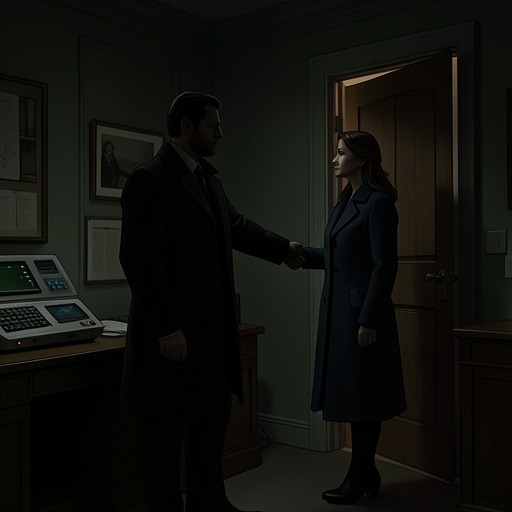
At the end of a courtroom session, after the court has adjourned in light of new evidence, the room empties while Leinen remains seated. Collini says nothing for a long time. Leinen does not interrupt that silence; he waits until Collini comes back to the present. Their exchange takes place within the formal attorney-client relationship, yet its defining gesture is Leinen’s decision not to force Collini to speak before he is ready.
Silence and the Question of Victory
When Collini does speak, he says he is not good with words and does not believe they have won. He recalls an Italian saying: the dead do not want revenge; only the living do. He adds that he spends his days in his cell thinking about it. Leinen answers that it is a wise saying, and Collini repeats the judgment before standing to shake hands with him. The exchange does not resolve what the case means to either man. Instead, it leaves their professional bond suspended between the trial’s apparent progress and Collini’s doubt that a legal victory would amount to winning.
The Last Message
After Collini takes his own life in his cell, the presiding judge discontinues the trial. Leinen remains in the courtroom, looking at the empty chair where his client had sat, until a police officer gives him a sealed envelope marked for defending counsel. The usher explains that it was found on Collini’s table. Its delivery makes the attorney-client relationship continue, briefly, beyond the end of the proceedings: Leinen is the intended recipient of Collini’s final message.
The envelope contains a small, brittle, faded black-and-white photograph with a jagged white border. It shows a girl of about twelve in a pale blouse, looking intently into the camera. On the back, in Collini’s clumsy handwriting, is the note: "This is my sister. Sorry for everything." The photograph identifies the sister as the subject of Collini’s final communication, while the apology remains unexplained in the note itself. The message offers Leinen something intimate, but not a further conversation or an account of what Collini meant by his words.
What the Relationship Leaves Unresolved
The contrast between the two final communications gives the relationship its distinctive shape. In court, Collini speaks of the living and the dead but doubts that the defense has won; afterward, his photograph and apology reach Leinen without the possibility of a reply. Leinen’s patience with Collini’s silence and his receipt of the envelope establish a bond of attention and trust, but the trial’s discontinuation and Collini’s death leave its central questions unanswered. Their last contact is therefore neither a courtroom victory nor a full explanation, but a handshake followed by an image and a few words.